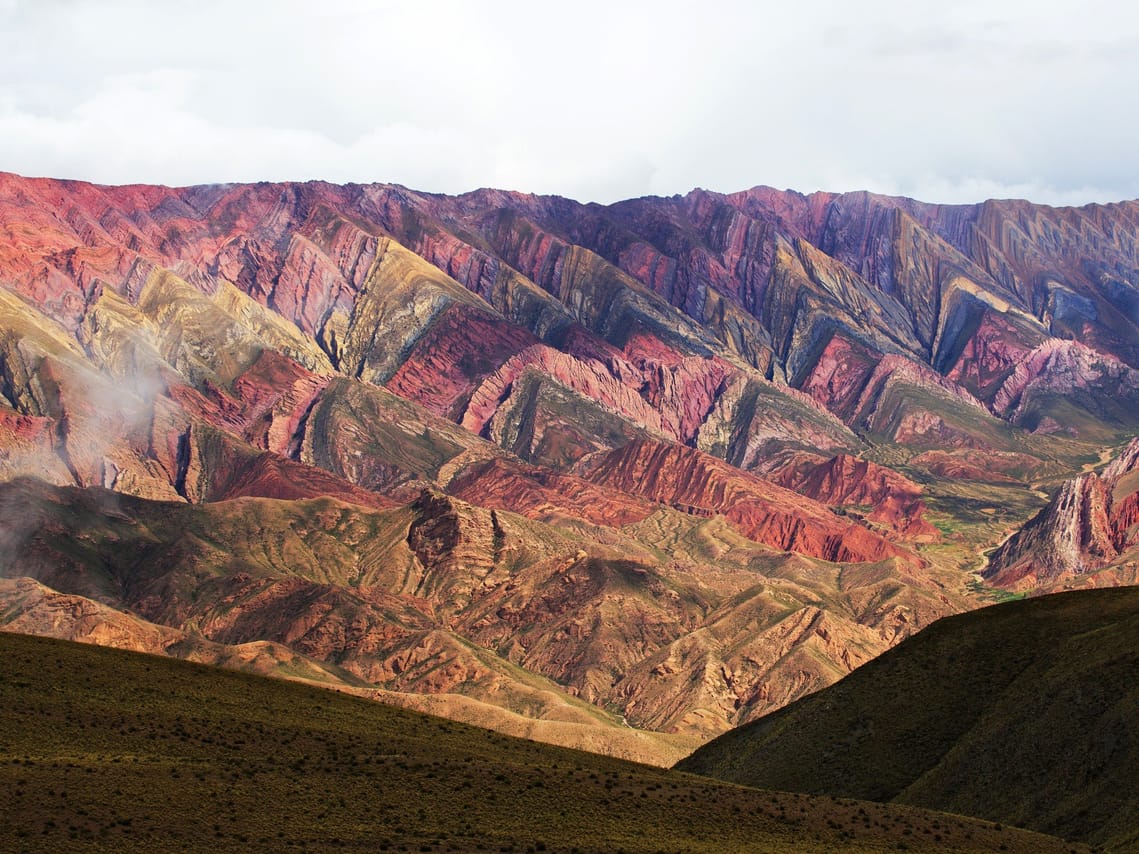
Jujuy: Quebrada de Humahuaca with Hornocal
About this activity
This day trips & excursions is one of the standout things to do in San Salvador de Jujuy, Argentina. it combines the highlights below into a single, easy-to-book experience. Salta, San Salvador de Jujuy, Quebrada de Humahuaca, Yala, Volcano, Tumbaya, Purmamarca, Maimará, Tilcara, Huacalera, Tropic of Capricorn, Uquía (Cuzco Paintings). And then Cerro de los 14 Colores.
A walk through an impressive ravine, where colors predominate on the hills, thanks to thousands of years of oxidation of the minerals in them. The towns, landscapes, culture and its people are the main protagonists of this excursion. Duration: 8 hours. (approx.) Round trip transfers to and from meeting points. Total route: 127 km. Maximum height 3012 meters above sea level. Search by S.S. from Jujuy from 9am.
We will travel to the city of Humahuaca, a UNESCO World Heritage Site, towards the outskirts of the province of Jujuy, just a few kilometers from the border with Bolivia. This excursion will allow us to appreciate the most impressive colors of the Argentine North, its culture, its unique towns and its people. We will start from the city of Jujuy, taking the RN 9 to later enter and have the opportunity to know the great Quebrada de Humahuaca, recognized for its imposing landscapes and its picturesque towns such as Volcán, Purmamarca where we will find the majestic Cerro de los 7 Colores; Tilcara; Humahuaca, the largest town in the ravine; Uquía, a small town where the church of San Francisco de Paula is located, dating from the 17th century, where the ancient paintings of the Arcabuceros Angels reside, coming from Cuzco-Peru, painted at the time of colonization; Huacalera, where we step on the imaginary cut of the Tropic of Capricorn and finally, La Paleta del Pintor in Maimará. In Humahuaca it will be the longest stop time, where you can have lunch the best regional dishes where llama meat predominates and also get to know the town, where culture takes over the streets. Carnival is a main theme in this place, since it is the epicenter of this celebration. After lunch, we start our way back, alternating the stops.
Once you arrive in Uquía, you transfer to a 4x4 vehicle where the road to Hornocal will begin to enjoy these magnificent panoramic views. On the return there is a stop in Humahuaca for 20 minutes. It is recommended to bring a lunch or something light for lunch since there is not time to stop at a restaurant in Humahuaca
*In case of leaving from Purmamarca, they will not visit the stops between the city of Jujuy and that point.
*In case of leaving from Tilcara, they will not visit the stops between Jujuy and that point.
Good to know
- •Duration: approximately 10 hours.
- •Confirmation is instant — your spot is secured the moment you book.
- •Offered in 2 languages.
- •Confirm weather-appropriate clothing and comfortable footwear before you go.
Who it's for
Best time to visit
San Salvador de Jujuy is rewarding year-round, but spring and early autumn typically bring the most comfortable temperatures and thinner crowds than peak summer. Morning departures tend to be quieter and cooler; booking ahead is recommended in high season as popular day trips & excursions slots in San Salvador de Jujuy sell out.
Frequently asked questions
More things to do in San Salvador de Jujuy
- Desde Jujuy: Salinas Grandes con Hornocal en dos días
- Humahuaca + Salinas Grandes en dos días completos
- From Jujuy: Full-Day Tour to Salinas Grandes and Purmamarca
- Jujuy: Salinas Grandes and Purmamarca
- Jujuy: Salinas Grandes and Purmamarca
- From Jujuy: Full-Day Tour to Salinas Grandes and Purmamarca
- Tierra del Fuego National Park - USHUAIA (Shared tour)
- Tucumán: Tafí del Valle, Ruins of Quilmes and Cafayate
- Puerto Madryn: VALDÉS PENINSULA with visit to the Magellanic penguin colony
- Boca Juniors & River Plate Stadium Tour
- Boca Juniors Stadium Tour and Museum Admission Ticket
- Cachi, Hornocal y Salinas: Huellas que cautivan
All things to do in San Salvador de Jujuy →Every tour in Argentina →