Antalya8h
Kemer Pirate Boat Trip with Free Transfer from Antalya
4.6(5)
From€30.00
/ person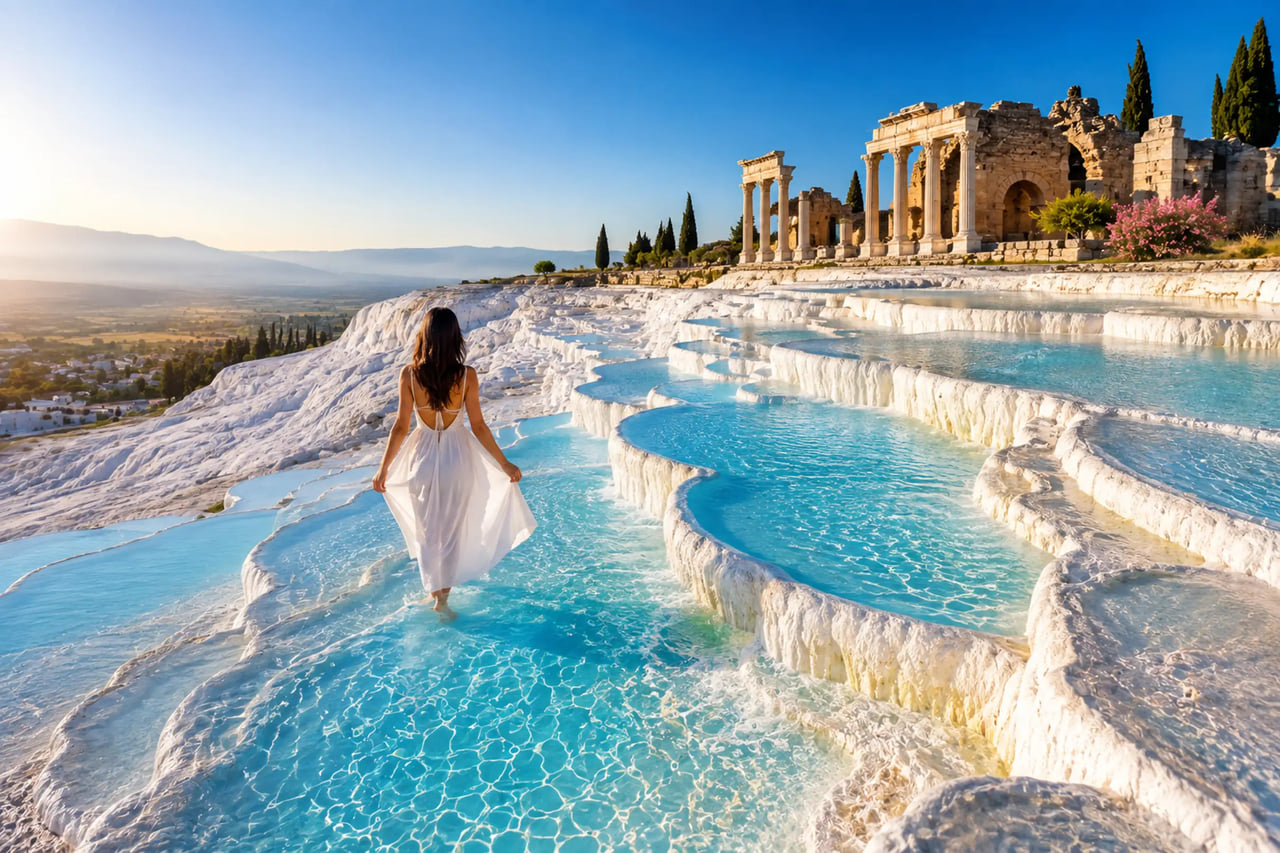
 1 / 10
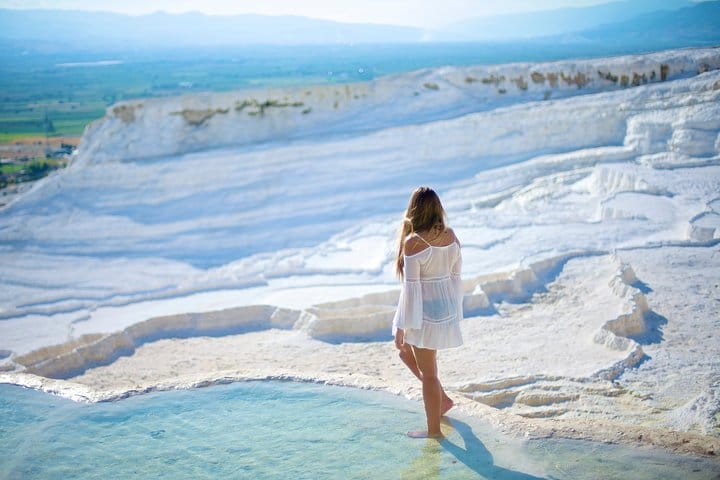
Explore two of Turkey's most striking natural and historical wonders on this 12-hour guided journey from Antalya to Pamukkale's otherworldly white travertine terraces and the ancient Greco-Roman city of Hierapolis. This comprehensive day trip combines geology, archaeology, and local culture in one immersive experience.
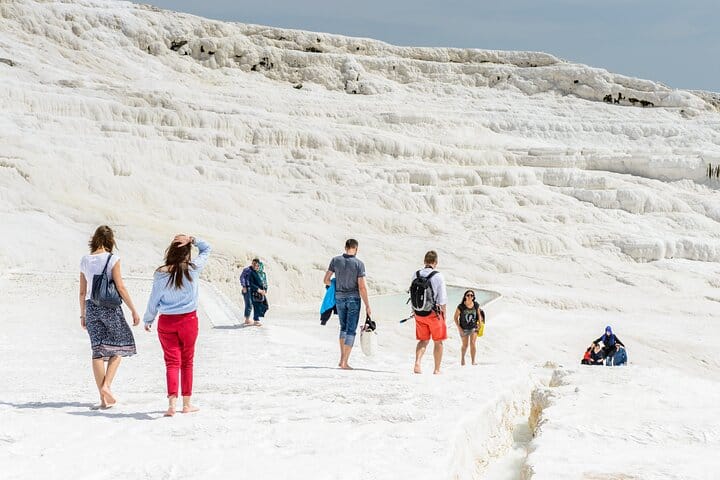
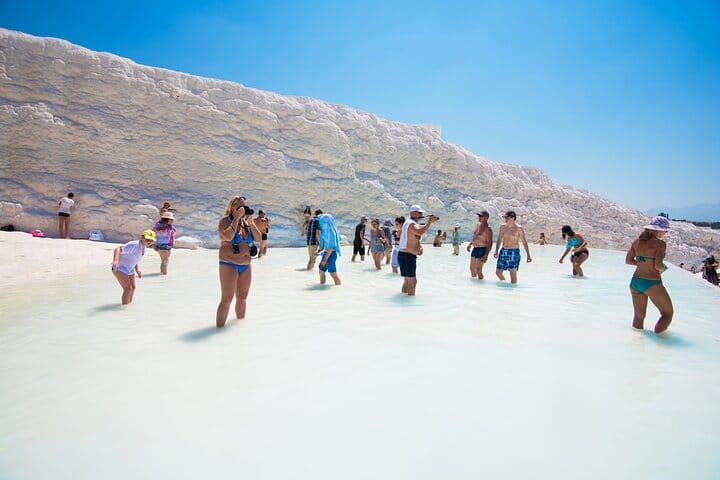
A day trip to Pamukkale from the port city of Antalya is a nature and culture trip that you simply cannot afford to miss. The tour is mainly centered on the ancient town of Hierapolis and the world-famous travertine of Pamukkale. The travertine or calcium terraces are locally known as Pamukkale, meaning ‘cotton castle’ because of their physical appearance. The site is located around 230 kilometers from the city of Antalya and is considered one of the oldest thermal towns in the world.
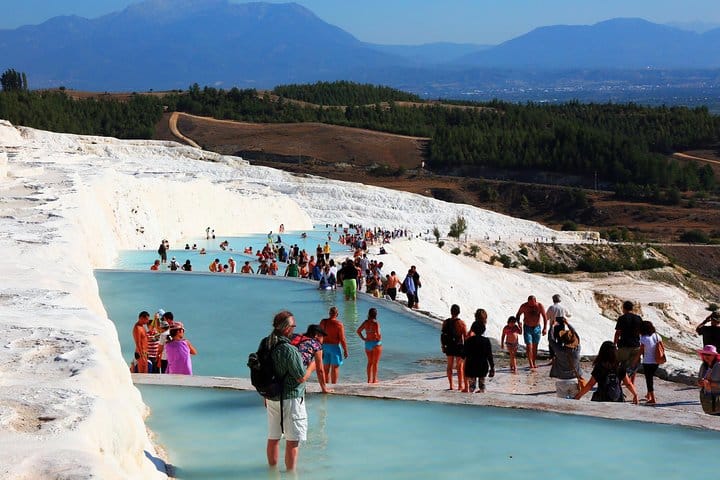
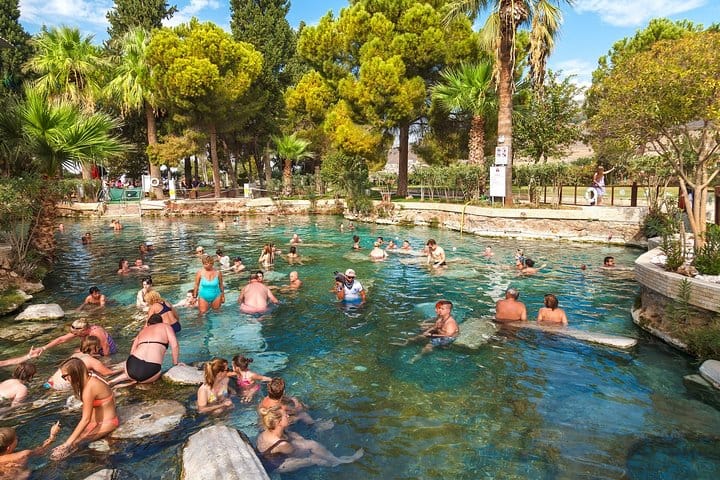
Swimming in the thermal waters is one of the highlights of the travel, with the water temperature at 30 degrees Celsius. According to local legends, the thermal waters of Pamukkale can heal conditions such as heart disease, digestion, rheumatism, skin disease, circulation, and respiration.
There are several small thermal pools that you can explore, depending on weather conditions.
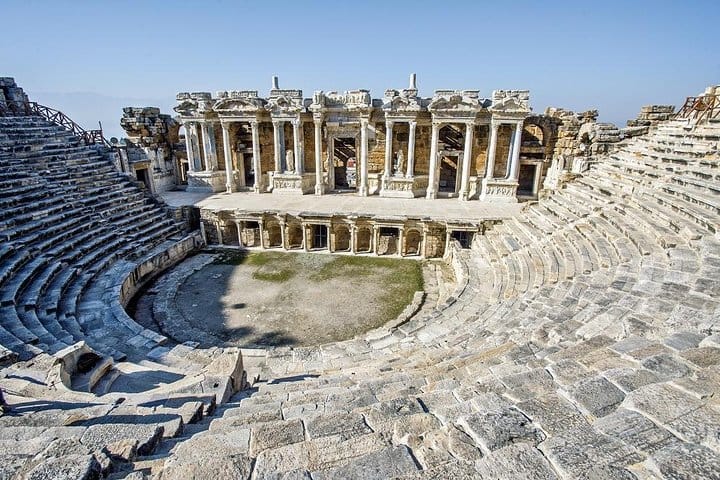
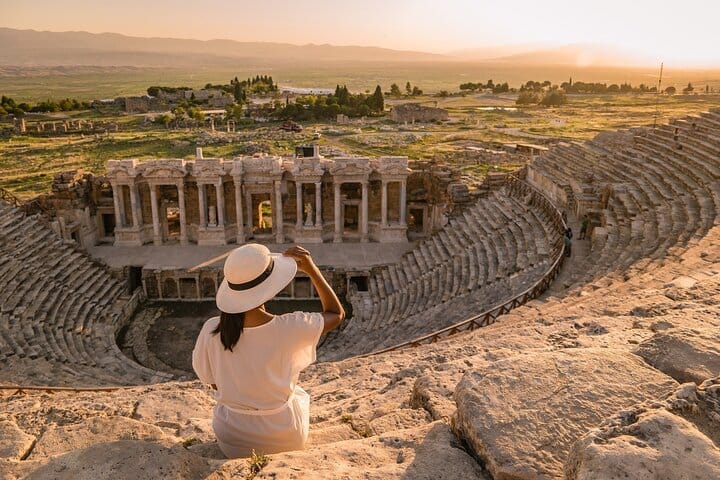
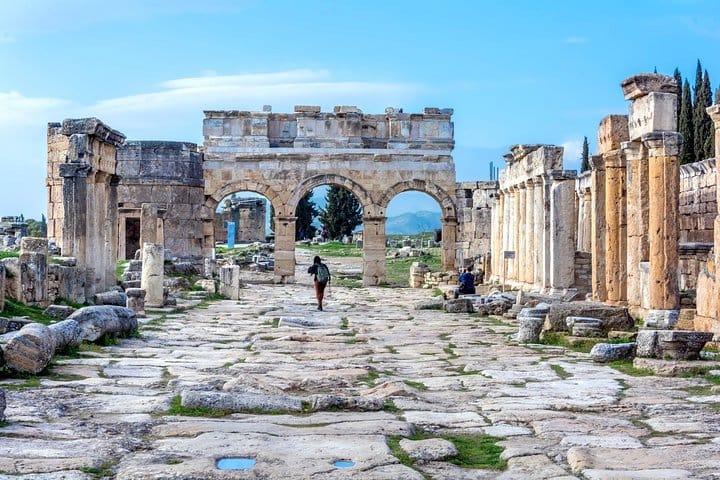
In addition to the thermal waters, another highlight of this trip is the ancient Greek town of Hierapolis, which translates to 'Holy City'. It was built just adjacent to Pamukkale hot springs by the 2nd BC king of Pergamon and spans about 2.7 kilometers in length, 0.6 kilometers wide, and 0.16 kilometers high. You can explore the main streets and ancient theater among many other ruins from the ancient Roman and Greek civilizations.
Moreover, this antique city can be seen from the town of Denizli, some 20 kilometers away.
For history buffs, the city got its name Hieropolis from the activity of minting bronze coins that were done there in the 2nd century BC, which later changed to Hierapolis. But when Attalus III died, he surrendered his kingdom to Rome, making it a part of the Roman province of Asia.
One of the main attractions of the city of Hierapolis is the museum, which houses historical artifacts from the city as well as from Attuda, Tripolis, Laodicea, and Colossae. The exhibition space features three closed sections of the Hierapolis Bath as well as the open sections in the eastern part, which are believed to have been used as the gymnasium and library.
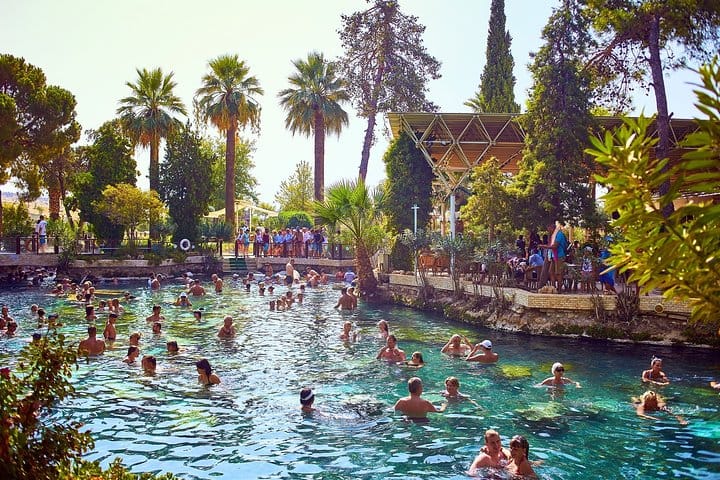
Just next to the antique city and Pamukkale formation is the famous Cleopatra pool, which is quite an interesting attraction and visitors can test the waters here too. The pool was not owned by the legendary queen of the Ptolemaic Kingdom of Egypt. Rather, it is an artificial pool built on top of the ancient columns that fell from the adjacent two during the earthquake. What is more, you can swim amongst these columns and ruins in the Cleopatra pool. This tour gives you enough free time to relax, swim and enjoy the surrounding landscape.
There are a total of 17 hot springs in Pamukkale, with a temperature ranging from 30 degrees Celsius to 100 degrees Celsius.
An important point to note is that this entire site is listed as a UNESCO Heritage, and thus it attracts millions of visitors every year from every corner of the world.
Spring (April–May) and autumn (September–October) offer comfortable temperatures for walking and hiking. Avoid peak summer heat (July–August) when afternoon temperatures exceed 35°C and crowds are heaviest. Winter visits are possible but travertine pools may be closed for maintenance.
Based on 5 ratings
Top-rated, great-value activities in Antalya